


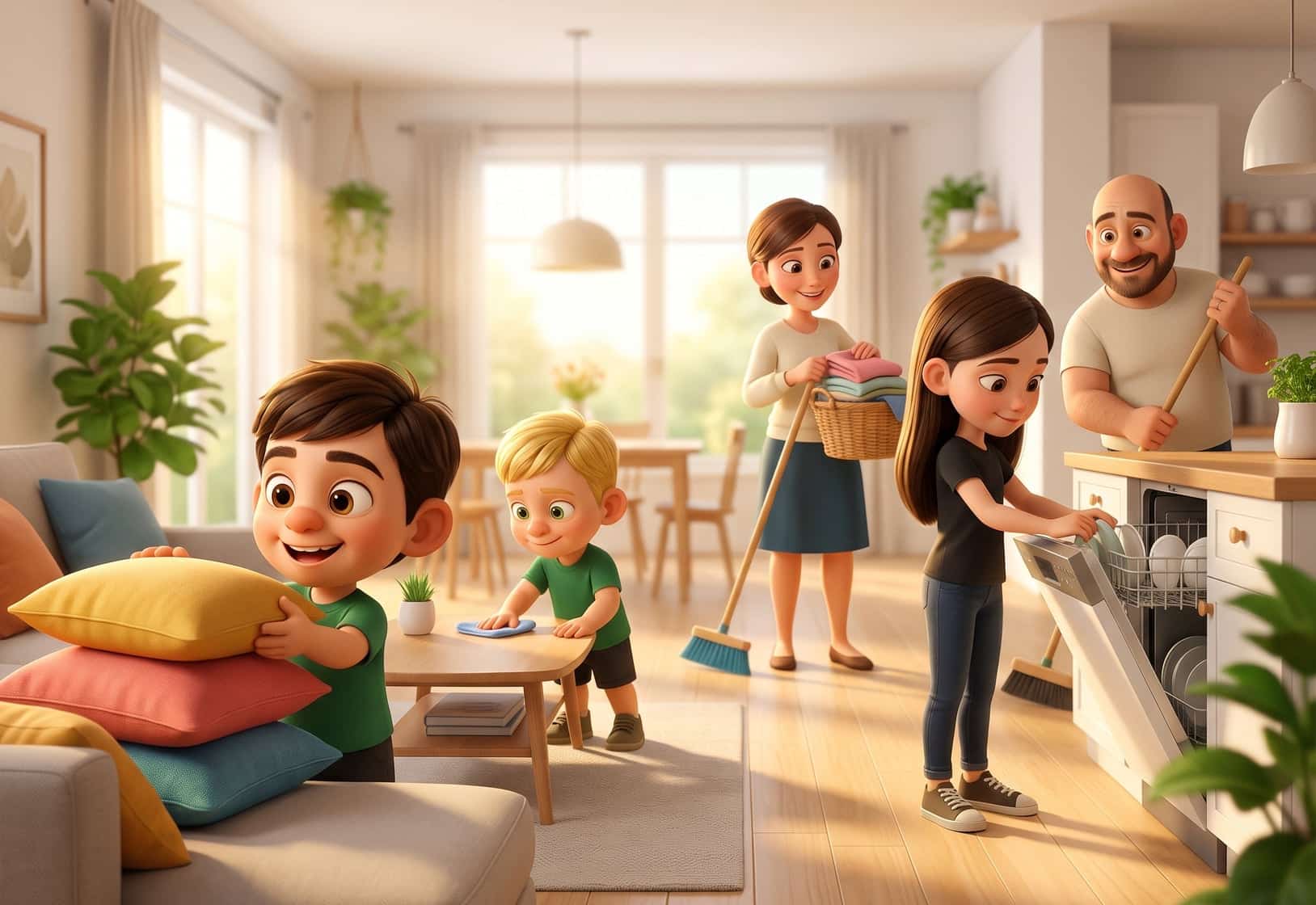
Age-Appropriate Chores for Kids Ages 2 to 16
One of the most common questions parents ask is how to assign age-appropriate chores for kids without setting everyone up for frustration. Too easy and children lose interest. Too hard and they shut down. Getting the balance right at each stage means your child actually builds confidence rather than just crossing items off a list. Here is a practical breakdown by age group, based on what kids can genuinely manage physically, emotionally, and cognitively.
What Toddlers and Young Children Can Do (Ages 2-5)
Toddlers want to help. That instinct is real and worth encouraging before it fades. The trick is keeping tasks short, concrete, and tied to something they already do. A two-year-old cannot scrub a toilet, but they can absolutely put their shoes in the basket or carry their plate to the sink.
Good starting chores for this age group include:
- Putting toys in a bin after playing
- Placing dirty clothes in the laundry basket
- Wiping up small spills with a cloth
- Helping set the table by placing napkins or unbreakable cups
- Feeding a pet with supervision
Consistency matters more than perfection here. A three-year-old making their bed will leave lumps everywhere, and that is completely fine. The habit is the point, not the hospital corners.
Building Real Skills in the Middle Years (Ages 6-10)
This is the sweet spot for introducing chores that have a visible impact on the household. Kids this age can follow multi-step instructions, handle basic tools, and start to feel genuinely proud when a task is done well. They also respond really well to knowing their contribution matters.
Ages 6-8
- Making their bed independently
- Clearing and wiping the dinner table
- Vacuuming their bedroom
- Packing their own school bag
- Helping to sort laundry by colour
Ages 9-10
- Loading and unloading the dishwasher
- Taking out the recycling
- Basic meal prep like washing vegetables or making toast
- Cleaning the bathroom sink and mirror
- Walking a dog with a parent nearby
This is also around the time that paper chore systems start to lose their grip. The novelty of gold stars wears off fast, and families with more than one child find tracking who did what becomes its own chore. Many families find an app like Tasks ‘n Chores fits much better at this stage, because kids can see their own points building toward something they actually chose.
Growing Independence in the Preteen Years (Ages 11-13)
Preteens are capable of a lot more than they sometimes let on. At this age, chores can start to mirror real adult tasks rather than just tidying up after themselves. The key shift here is moving from supervised tasks to owned responsibilities, things your child does without being reminded, because they understand it is simply part of how the household runs.
- Doing a full load of laundry from start to fold
- Preparing simple meals independently (pasta, sandwiches, scrambled eggs)
- Mowing the lawn or sweeping outdoor areas
- Babysitting younger siblings for short periods
- Grocery shopping from a list with a parent
- Managing their own schedule and homework without daily reminders
Tasks ‘n Chores works particularly well at this stage because preteens want autonomy. Letting them choose what they are saving points toward, whether that is screen time, a day out, or a specific item, gives them a reason to stay engaged that actually fits their personality.
Teen Chores That Prepare Kids for Adult Life (Ages 14-16)
By the mid-teens, the goal is less about completing chores and more about understanding how a household functions as a shared effort. A 15-year-old who can plan a weekly dinner, stick to a grocery budget, and clean up afterwards is genuinely ready for the world in a way that matters.
- Planning and cooking full family meals
- Deep cleaning a bathroom or kitchen independently
- Managing their own laundry schedule entirely
- Basic car care like checking tyre pressure or washing
- Helping younger siblings with their tasks
- Budgeting a small household purchase
At this age, many teens also appreciate the transparency of a system like Tasks ‘n Chores. They can see exactly what they have completed, what they have earned, and what they are working toward, without feeling like they are being nagged or micromanaged. That independence, combined with clear accountability, is exactly what teenagers need to feel respected while still being part of the family team.
The most important thing across every age is that chores feel connected to real life, not just arbitrary rules. When children can see their contribution matters, and when the reward for doing it reflects something they genuinely care about, the habit tends to stick in a way that sticker charts and token jars simply cannot sustain long-term.
If you want reminders, points, and reward tracking all in one place instead of chasing kids down the hallway, take a look at how Tasks ‘n Chores works.