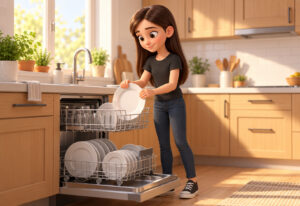
Chores for 5-Year-Olds: When Habits Start Sticking
If you have been waiting for the “right age” to start chores, five is it. Chores for 5-year-olds are not about getting the floors swept perfectly or the table set symmetrically. They are about catching a developmental window that child psychologists have pointed to for decades: the age when kids genuinely want to contribute, can remember a short sequence of steps, and are just starting to feel the satisfaction of finishing something they started.
Why Five Is a Different Kind of Starting Point
Toddlers can “help” in the loosest sense of the word. A three-year-old dropping socks in a laundry basket is adorable, but it requires so much scaffolding from you that it barely counts as independent. At five, something shifts. Kids this age can hold a two or three-step instruction in their head, they understand cause and effect, and they have a real hunger for approval that you can work with rather than just manage.
That combination does not last forever in quite the same form. By seven or eight, kids are busier, more opinionated, and a little harder to motivate with pure enthusiasm. So starting simple, consistent chores at five means you are building a foundation before resistance has a chance to set in.
Good Chores for 5-Year-Olds to Start With
The key is matching the task to what a five-year-old body and brain can actually do without constant correction. Tasks that are too fiddly breed frustration. Tasks with a clear, visible result feel rewarding. Here are reliable starting points:
- Making their bed (not perfectly, just pulled up and tidy)
- Putting dirty clothes in the hamper
- Setting the table with plates, cups, and cutlery
- Feeding a pet with a pre-measured scoop
- Wiping down the bathroom sink after use
- Helping pack their own school bag
- Putting their shoes away in the right spot
None of these require strength or fine motor precision beyond what most five-year-olds have. And every single one has a clear finish line, which matters more than parents often realise. When a kid can look at something and think “I did that,” the habit loop starts forming on its own.
Consistency Matters More Than Perfection
This is where most families hit a wall. The first week goes well. The second week, you forget to remind them on Tuesday, they skip it, and somehow the whole thing quietly collapses. It is not a parenting failure, it is just the reality of busy households. Habits need repetition, and repetition needs a system.
A lot of families start with a paper chart on the fridge. It works for a while, and there is nothing wrong with using one to get going. But paper charts have a shelf life. The novelty fades, stickers run out, and the chart that felt motivating in week one becomes invisible wallpaper by week four. Families with more than one child, or kids with different tasks and schedules, find the paper approach especially hard to maintain.
That is exactly the problem Tasks ‘n Chores was built to solve. Instead of a static list on the fridge, each child has their own task queue, gets reminders they can actually act on, and earns points toward rewards they chose themselves. For a five-year-old, seeing their points go up after making their bed is a feedback loop that no sticker chart can quite replicate.
Making Rewards Work Without Bribing
There is a meaningful difference between a bribe and a reward, and it comes down to timing and expectation. A bribe is “do this and I will give you something.” A reward system is a structure the child understands, agrees to, and participates in. At five, kids are old enough to be part of that conversation.
Ask your child what they would like to work toward. It does not have to be expensive or elaborate. Extra screen time on a Friday, choosing dinner one night a week, a small toy they have had their eye on. When the reward is something they actually care about, the motivation is internal rather than something you have to manufacture every morning.
Tasks ‘n Chores lets kids pick their own rewards within whatever boundaries parents set, which removes a lot of the negotiation that tends to derail these systems. The child has skin in the game from day one.
Starting Small and Building Over Time
One mistake worth avoiding: loading a five-year-old with six new chores in week one. Pick two or three, let those become genuinely automatic, and then add more. The goal at this age is not a full contribution to the household. It is building the habit of contributing at all, which is a much bigger deal than it sounds. A child who learns at five that they are a real part of how the family runs will carry that into the years when you actually need their help with harder things.
Give it a month with just the basics. You will probably be surprised how naturally it becomes part of your child’s routine, especially once they have a system that makes the expectation visible and the payoff feel real.
If you are ready to move beyond reminders and guesswork, take a look at how Tasks n Chores works.