







Chores in a Blended Family: Fair for Every Kid
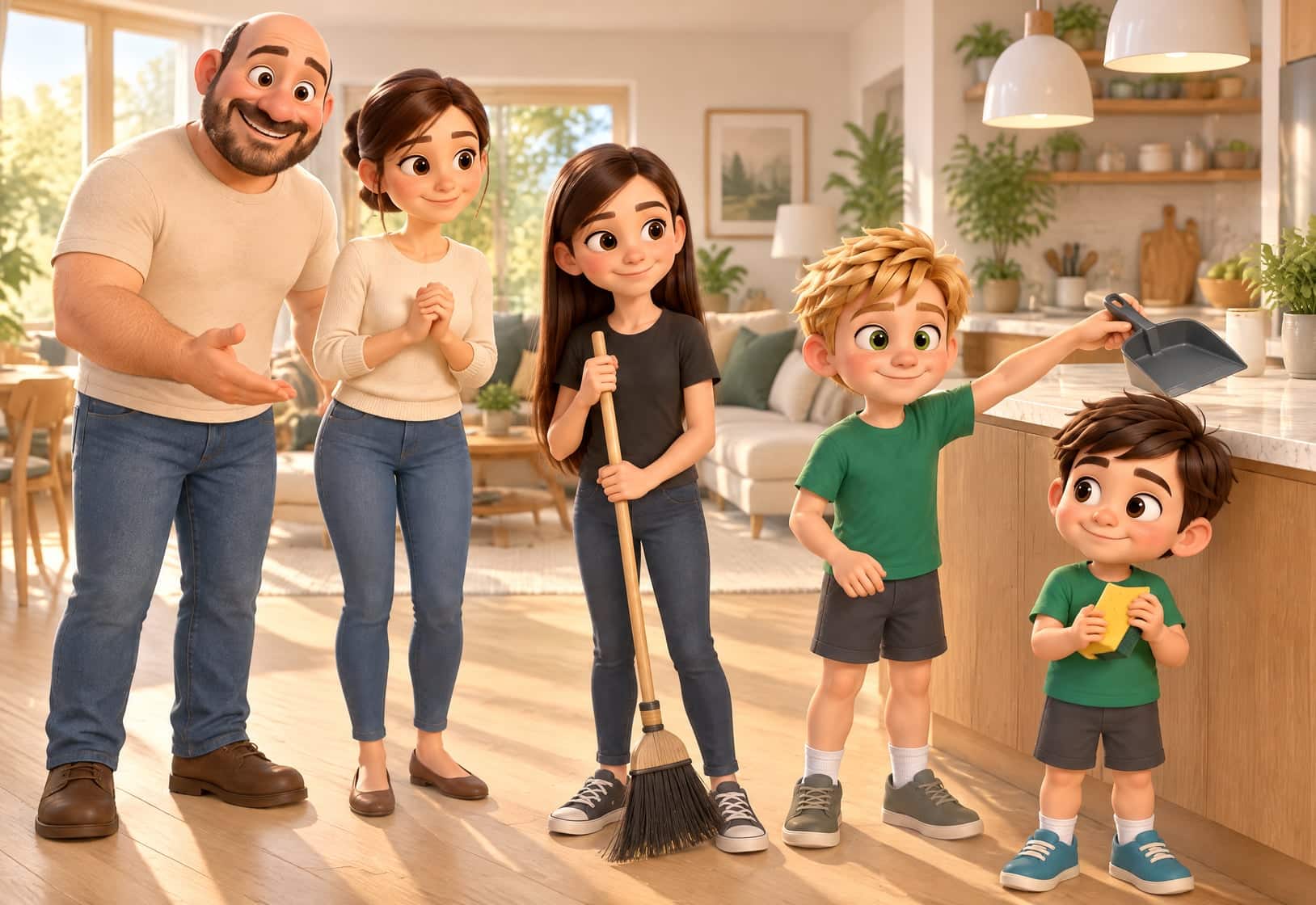
Chores in a blended family carry a weight that chores in other households simply do not. The moment one child thinks a stepsibling is getting an easier ride, you are no longer talking about who unloaded the dishwasher. You are talking about belonging, fairness, and whether this new family actually works for them. That is a lot to hang on a household task, but it is real, and it is worth taking seriously.
Why the Usual Approaches Fall Apart in Blended Families
A lot of parents try to keep things simple at first. One list on the fridge, same jobs for everyone, done. The problem is that blended households are rarely simple. Kids arrive with different ages, different abilities, different histories with chores, and very different ideas about what counts as pulling your weight. A ten-year-old who has been setting the table since she was six will resent doing the same job as an eight-year-old who has never had to do anything at home. Fairness does not mean identical. It means appropriate, and that distinction matters enormously to kids.
Then there is the part-time complication. Many blended families have children who are only there on certain days. Assigning a weekly rubbish run to a child who is only with you every other weekend creates resentment on both sides. The child feels punished for existing on a schedule. The full-time kids notice every exception. No paper list survives that level of complexity for long, and a jar of tokens becomes chaos the moment a child says they were not even here when the rule was set.
How to Build a Chore System Every Child Accepts as Fair
Start with a family meeting, and make sure every child has a voice in it. Not just the older ones, not just the biological ones. Explain that everyone in the house contributes because that is how the house runs, not as a punishment and not as favouritism. Ask what jobs each child already knows how to do, what they think they could learn, and what they genuinely find manageable. Kids who help design the system are far more likely to stick with it.
A few principles that tend to work well:
- Age and ability over equality of tasks. Assign jobs based on what a child can actually do well, not on making every list look the same length.
- Adjust for custody schedules. Children who are with you part-time should have tasks tied to the days they are present, not a full week of responsibilities they cannot physically complete.
- Keep rewards consistent in structure, not identical in value. Every child earns points for their own completed tasks. What they choose to do with those points can be personal to them.
- Revisit the system regularly. What worked when everyone first moved in together will not work six months later. Build in a monthly check-in so the system can grow with the family.
Letting Each Child Own Their Own Progress
One of the quieter wins in a blended household is giving each child their own space within the shared system. When a child can see only their tasks, track only their points, and choose their own rewards, they stop comparing themselves to their stepsiblings quite so much. The competition drains away because they are not on the same leaderboard. They are just doing their own thing.
This is where an app like Tasks ‘n Chores makes the day-to-day much simpler. You can set different tasks for different children, adjust for the days each child is actually home, and let each one earn points toward rewards they picked themselves. There is no central chart for anyone to point at and declare unfair. Everyone logs in and sees their own world.
What to Do When Kids Push Back Anyway
They will push back. That is not a sign the system is broken. It is a sign that kids are paying attention and testing whether the rules apply consistently. When a child says it is not fair, resist the urge to defend the system immediately. Ask them what specifically feels off. Sometimes they have spotted a genuine gap. Sometimes they are just frustrated about something else entirely and the chores are a convenient target.
Parents using Tasks ‘n Chores often find that having everything logged in the app takes some of the heat out of these moments. When a child claims they did a task and did not get credit, you can check together. When they say their stepsibling has fewer jobs, you can show them the actual lists side by side and explain the reasoning calmly. Transparency does not eliminate arguments, but it does make them shorter.
Blended family life asks a lot of everyone involved, and chores are genuinely one of the easier things to get right once you stop trying to make everything look identical. Fair does not mean the same. It means every child knows what is expected of them, knows they will be recognised when they deliver, and trusts that the system was built with them in mind.
If you want one place where every child in your household can see their own tasks, earn their own points, and feel like the system is built for them, have a look at how Tasks n Chores works.