


Chores for 8-10 Year Olds: The Golden Age for Real Responsibility
Chores for 8-10 year olds often get underestimated. Parents either keep things too easy, worried about getting the task done quickly themselves, or they pile on so much that kids dig their heels in. But somewhere between those two extremes sits a genuinely exciting window. Children this age are ready for real responsibility, and most of them actually want it, even if they would never admit that out loud.
Why This Age Group Is Different
Something shifts around age eight. Kids start connecting actions to outcomes in a way younger children simply cannot. They understand that dishes left in the sink do not wash themselves, that a bathroom gets grimy if nobody cleans it, and that the family runs better when everyone pulls their weight. That understanding is the foundation everything else builds on.
They are also developing a strong sense of fairness. If a sibling is contributing and they are not, they notice. If they are doing more than their share, they notice that too. Use that instinct. It is a lever, not an obstacle.
Physically, 8-10 year olds can handle tasks that genuinely help the household. They have the coordination, the attention span, and enough strength to do things properly. This is the age to stop giving them pretend jobs and start giving them real ones.
Age-Appropriate Chores for 8-10 Year Olds
The key is matching the task to the child, not just the age. Some eight year olds are ready to cook simple meals. Some ten year olds still need reminders to rinse their plate. Use the list below as a starting point, and adjust from there.
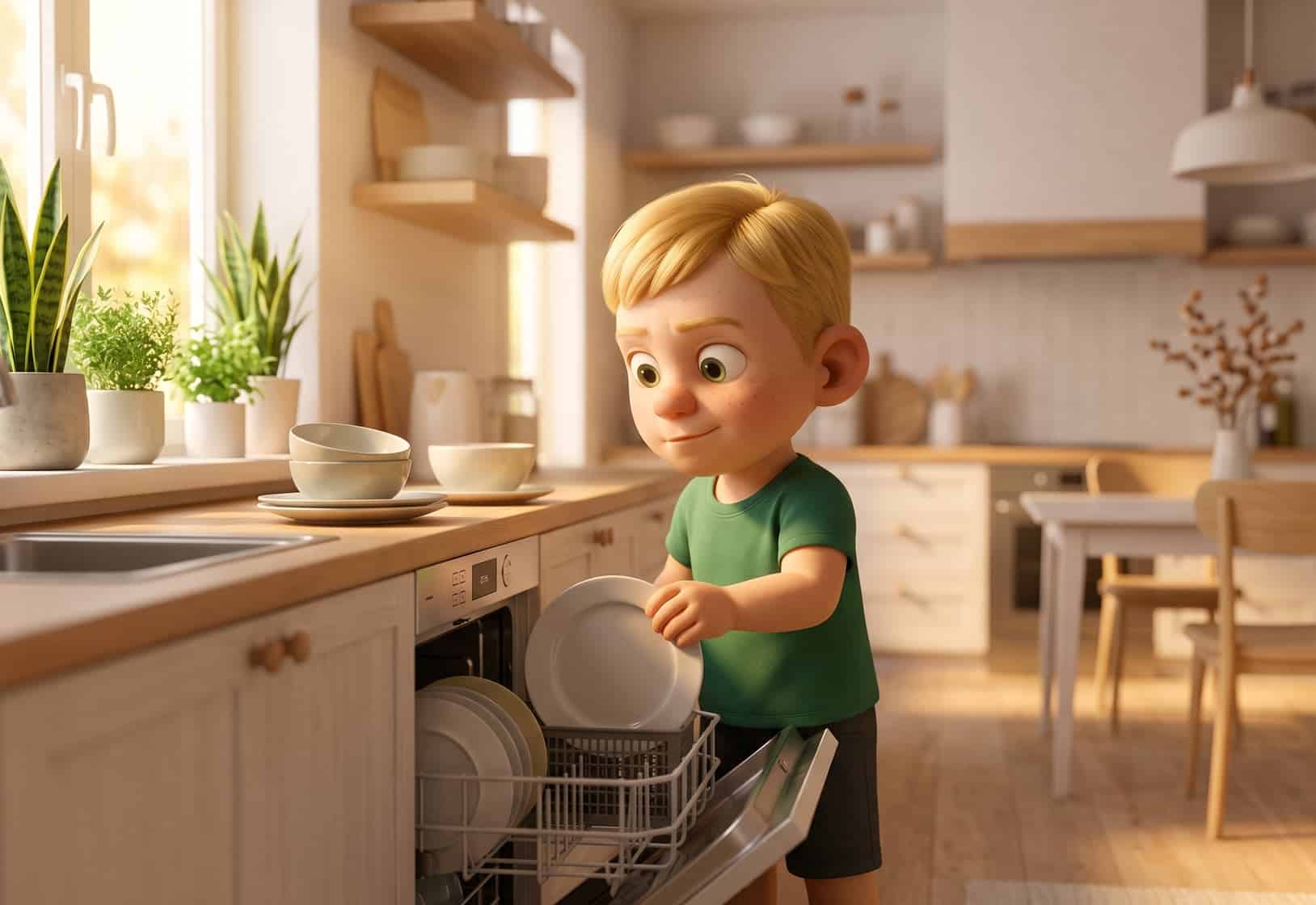
- Kitchen: loading and unloading the dishwasher, wiping down the table and counters after meals, making their own breakfast or a simple lunch
- Laundry: sorting clothes by colour, folding and putting away their own laundry, pairing socks
- Bedroom and bathroom: making their own bed daily, cleaning their bathroom sink and mirror, tidying their room without being asked
- Outdoors: raking leaves, sweeping a path or patio, watering plants
- Pets: feeding, refilling water, basic grooming with supervision
- General household: vacuuming a room, taking out recycling, helping with grocery unpacking
Notice that none of these are token gestures. They are things that actually need doing and that make a visible difference. That visibility matters enormously to kids this age.
How to Make Chores Stick Without the Daily Battle
The biggest mistake parents make is treating chores as a one-time conversation. You sit down, explain what needs doing, and assume it will happen. It rarely does. Kids need structure, but they also need to feel ownership over what they are doing.
Give them choice within the structure
Rather than handing down a rigid list, let your child help choose which jobs are theirs. Offer four or five options and let them pick three. They are far more likely to follow through on something they agreed to than something that was simply handed to them.
Connect effort to something they actually want
Motivation at this age is very personal. One child will work hard for screen time, another for a trip to the cinema, another just to be the one who is trusted with the big jobs. Pay attention to what actually drives your child and build from there. Vague praise fades fast. Specific, meaningful rewards do not.
This is exactly where apps like Tasks ‘n Chores come in. Kids earn points for completed tasks and then choose their own rewards from a list the family sets up together. The child has real skin in the game, which changes the whole dynamic.
Keep the system simple and visible
Whatever system you use, it needs to be easy to check at a glance. Who has done what today? What is still outstanding? If a child has to ask a parent to find out where they stand, the friction builds up and the whole thing starts to fall apart. Systems that update in real time and live on a device kids already use tend to outlast anything that relies on paper and memory.
What Happens If You Skip This Window
The honest answer is that the teenage years become harder. Kids who have been doing real chores since age eight have already internalised the idea that contributing to the household is just part of life. Kids who are handed chores at thirteen for the first time tend to experience it as a punishment, and they resist accordingly.
Starting at 8-10 also gives you years of low-stakes practice before the genuinely high-stakes moments arrive. A child who learned to manage their responsibilities at nine is better placed to manage homework, part-time work, and eventually adult life. That is not an exaggeration. It is simply how habits form.
Families who use Tasks ‘n Chores often say the biggest surprise is how much kids this age rise to meet real expectations. Given clear tasks, a fair system, and rewards that mean something to them personally, most children in this age group do not need to be chased. They just need to be set up properly and then trusted to get on with it.
If you want an easier way to assign tasks, track who did what, and let your kids choose their own rewards, take a look at how Tasks n Chores works.