







How to Teach a Child to Load the Dishwasher
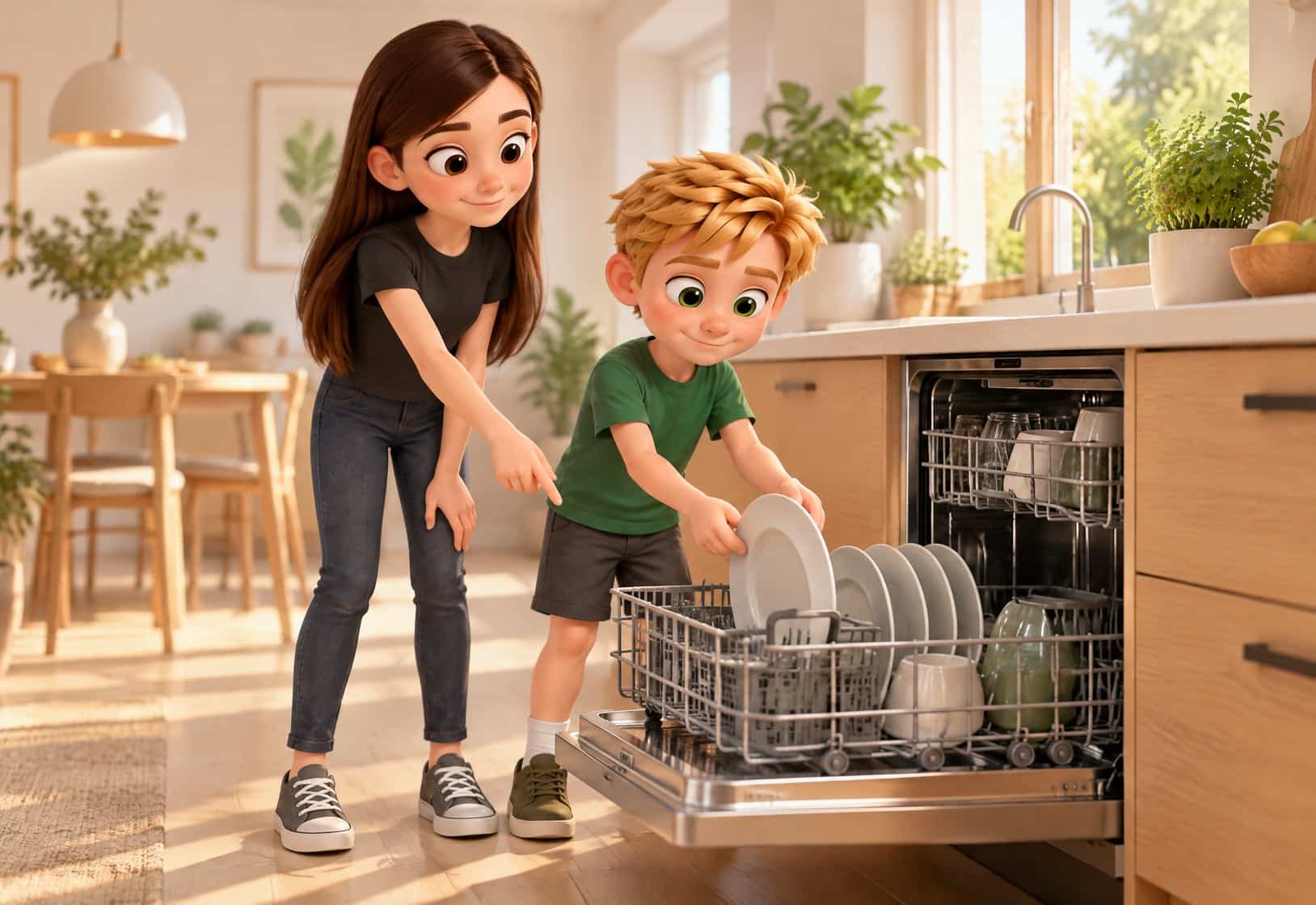
One of the most practical ways to teach a child to load the dishwasher is to treat the first session as a proper handover, not a quick demo you do while half-watching something else. Kids remember what they practise alongside you, not what they watch from a distance. Spend ten minutes doing it together once, and you will probably never need to redo those dishes again.
What Age Can Kids Start With the Dishwasher?
Most children can start helping with the dishwasher somewhere around age 7-8, though plenty of confident 6-year-olds manage it fine. The honest answer is that it depends less on age and more on whether your child can distinguish fragile from sturdy, and whether they are tall enough to reach the top rack without straining. For younger kids, emptying the lower cutlery basket is a brilliant starting point. They feel useful, there is no breakage risk and it builds the habit early.
Older children, from about 9 or 10 upwards, can take on the full job: scraping plates, loading both racks correctly, adding the tablet and pressing start. That is a genuinely useful contribution to the household, and most kids feel good knowing they are trusted with something real.
How to Teach a Child to Load the Dishwasher Step by Step
Break it into three stages the first time you do it together. Do not rush through all three in one go if your child seems overwhelmed. Two sessions is fine.
Stage 1: Before You Load
- Scrape leftover food into the bin. The dishwasher cleans, it does not dissolve chunks of pasta.
- Check for anything that should not go in. Wooden spoons, good knives, non-stick pans and anything labelled hand-wash only all live outside the machine.
- Give very greasy pans a quick rinse so the filter does not clog.
Stage 2: Loading Correctly
- Plates go on the bottom rack, angled inward so the spray arm can reach all surfaces.
- Glasses and mugs go upside down on the top rack so water drains out rather than pooling inside.
- Bowls should be tilted, not flat. A bowl sitting level will collect dirty water and come out worse than it went in.
- Cutlery goes in the basket with handles down, except for knives which go handles up for safety.
- Nothing should be blocking the spray arms. Give them a quick spin by hand before closing the door to check.
Stage 3: Starting the Cycle
- Add the dishwasher tablet to the correct compartment, not just thrown in loose.
- Check the rinse aid level if your machine has an indicator light.
- Select the right cycle. For most family loads, the standard or eco setting is fine. Show your child which button to press and let them press it.
Teaching Kids to Empty the Dishwasher Properly
Emptying is actually the trickier habit to build because it requires knowing where everything lives. The first couple of times, stand nearby and let your child ask where things go rather than you directing every item. They will learn faster when they are doing the thinking. A few things worth pointing out specifically:
- Always empty the bottom rack first. If you empty the top rack first, any water that collected in upturned lids or deep bowls will drip down onto the clean dishes below.
- Check that everything is actually dry before putting it away. Some plastics hold water even after a full cycle.
- Anything still wet goes back in or gets a quick wipe, not shoved dripping into the cupboard.
How to Make Dishwasher Duty Stick as a Regular Chore
The teaching part is straightforward enough. The harder part is keeping the habit going once the novelty wears off, which it always does. A few things help. Rotate the job between siblings so no single child owns it permanently and starts to resent it. Keep the expectation consistent so it is never a negotiation. And make sure your child knows what completing the task earns them, whether that is pocket money, screen time or something else they have chosen themselves.
That last point matters more than most parents expect. Kids are much more motivated when the reward feels like their idea. In our house we started using Tasks ‘n Chores for exactly this reason. The kids picked their own rewards from the start, which meant they actually cared about earning the points. Dishwasher duty went from an argument to something they would remind us about.
Tasks ‘n Chores also sends reminders so you are not the one chasing anyone. You assign the task, set when it is due, and the app handles the nudges. If your child marks it complete and you can see the dishes are done, you approve the points and move on. It takes about thirty seconds of your attention and removes the back-and-forth that makes chore time exhausting.
Once a child can load and empty the dishwasher reliably, it is a genuine contribution to the household. They are saving you time every single day. That is worth acknowledging out loud, separately from any points or rewards. Kids who know their help actually matters tend to keep helping.
If you want an easy way to assign dishwasher duty, track completions and let your kids earn rewards they actually care about, have a look at how Tasks n Chores works.