







Pet Care Chores for Kids: What They Can Really Do
Pet care chores for kids sound wonderful in theory. Your child begs for a puppy, you say yes (eventually), and suddenly you picture them cheerfully feeding, walking and grooming their new best friend while you sip coffee in peace. Then reality arrives, usually around day nine, when you are the one filling the water bowl again. The good news is that kids genuinely can take on meaningful animal care responsibilities. You just need to match the job to the age, set it up properly, and have a system that does not rely entirely on you remembering to remind them.
Which Pet Care Chores for Kids Are Realistic by Age
The biggest mistake parents make is handing over too much too soon, or not enough too late. Here is a rough guide to what actually works at different stages.
Ages 4 to 6
Young children can do more than we expect, as long as the task is simple, physical and immediate. Good starting points include:
- Refilling a water bowl (with supervision near sinks)
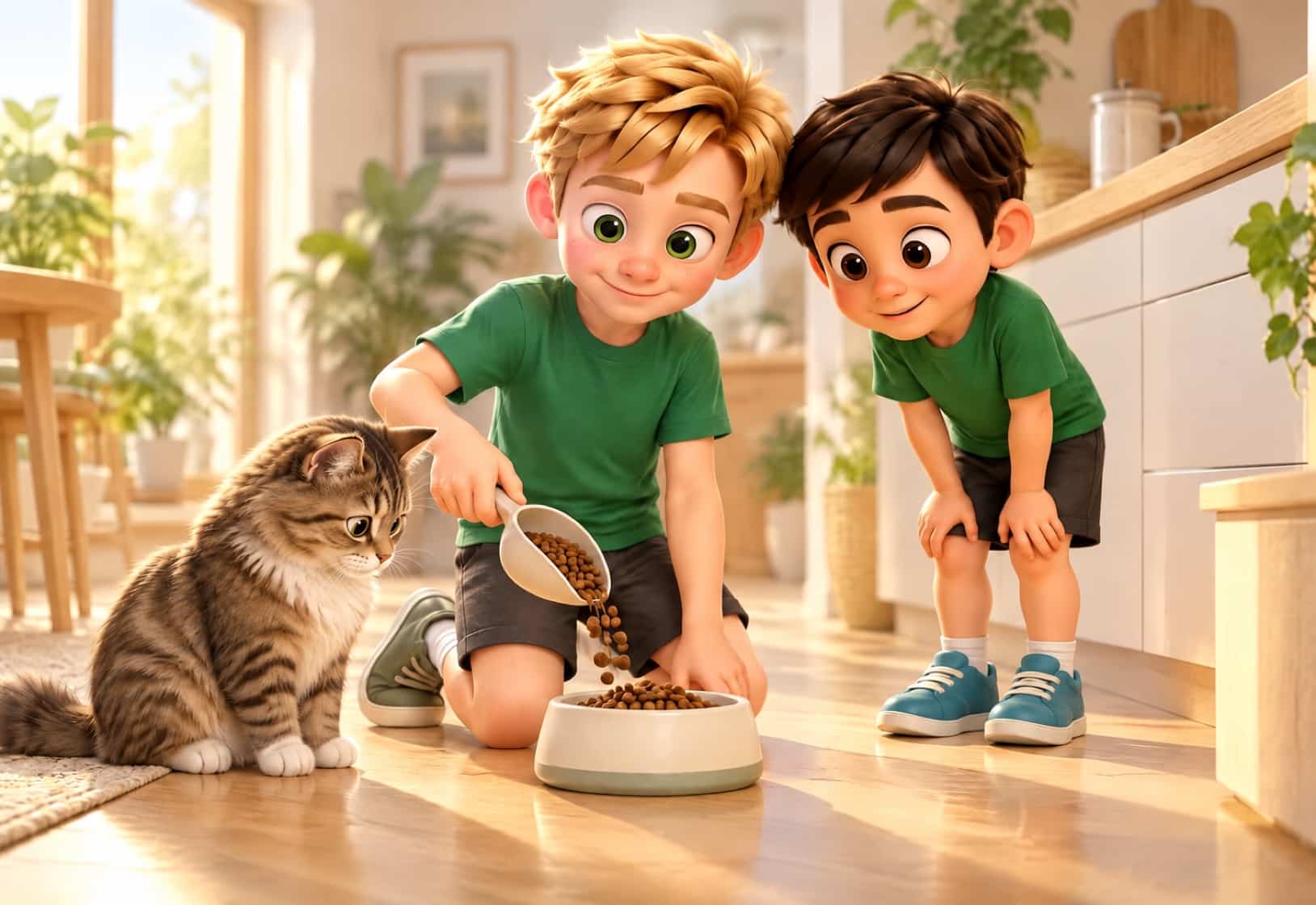
- Pouring pre-measured dry food from a scoop into a bowl
- Brushing a calm, cooperative pet with a soft brush
- Helping carry the food bag from the pantry
Keep it to one or two jobs. The goal at this age is building the habit of noticing the animal needs something, not running a full care routine solo.
Ages 7 to 9
This is the sweet spot for expanding real ownership. Kids this age can handle:
- Feeding pets on a set morning or evening schedule
- Cleaning out a small animal’s cage or tank with guidance
- Scooping a litter box daily (yes, really)
- Walking a smaller or well-trained dog around the block
- Checking that toys, bedding or perches are clean
They still need reminders sometimes. That is normal. The issue is when the reminder has to come from you every single day, because then you have not actually handed over the responsibility, you are just delegating the physical action while keeping the mental load yourself.
Ages 10 and up
Older kids can genuinely manage most of a pet’s daily care with minimal input from you. Walking the dog before school, tracking when food or litter is running low, scheduling a vet reminder, even basic first aid awareness. If your ten year old wanted the pet, this is the age where the full picture of what that means becomes their job to manage.
Why the Novelty Always Wears Off (and What to Do About It)
Every parent who has ever bought a hamster knows the arc. Week one: pure joy and devotion. Week three: you are cleaning the cage. This is not a character flaw in your child. It is just how novelty works in developing brains. The solution is not to wait for motivation to return on its own. It is to build a structure that makes the habit automatic.
Tying pet care to a visible routine helps a lot. So does connecting it to something the child actually cares about. When kids earn points for completing their tasks and those points go toward rewards they actually chose themselves, the motivation shifts from pleasing you to working toward something personal. That is a much sturdier engine.
Tasks ‘n Chores works well here because you can assign the pet care tasks with specific times, and kids can see exactly what they are working toward. The app handles the reminders, which means you are not the one nagging at 7am about the dog’s breakfast.
Setting Up Pet Chores So Kids Actually Follow Through
A few things make a real difference when you are trying to hand off animal care properly.
- Do it together first. Spend a week doing the task side by side before you step back. Kids need to see what done correctly looks like.
- Make the supplies easy to reach. If the food scoop is on a high shelf, you have accidentally made the job harder than it needs to be.
- Separate the pet from the punishment. If your child forgets to feed the cat, the consequence should not be that the cat goes hungry. Have a plan, but keep the animal’s welfare separate from the discipline conversation.
- Name the task specifically. “Take care of the dog” is too vague. “Fill the water bowl and give Scout one scoop of food” is a task a child can actually complete and feel good about finishing.
Making Pet Responsibilities Part of a Bigger Picture
Pet care is one of the best chores to assign because the feedback loop is immediate and emotional. The dog is visibly happy after a walk. The fish tank looks cleaner. The cat meows at your child instead of at you. That direct connection between action and result teaches responsibility in a way that emptying the dishwasher simply cannot.
When you fold pet tasks into a broader chore system, kids start to see themselves as genuinely contributing members of the household rather than helpers who are doing you a favour. Tasks ‘n Chores lets you mix pet jobs in with other household tasks, assign different jobs to different kids, and let each child track their own progress. The points they earn go toward rewards they picked themselves, which keeps the whole thing feeling fair rather than imposed.
The families who find this works best are the ones who treat the pet chores as non-negotiable from the start, not a bonus when the child feels like it. Build it into the routine early, make it visible and trackable, and connect it to something your child genuinely wants. That combination outlasts any initial excitement, which is the whole point.
If you want the reminders, the tracking and the rewards all in one place without any paper to lose, take a look at how Tasks n Chores works.